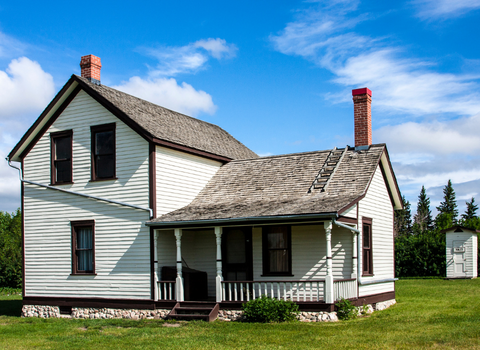
How to Sell an Inherited House in Rhode Island From Out of State


Inherited a Rhode Island house but live somewhere else? Sell it without flying in, plus our $10,000 More Guarantee.

Inherited a Rhode Island house but live somewhere else? Sell it without flying in, plus our $10,000 More Guarantee.
Finding out someone is living in a property you own without your permission is unsettling — and the phrase “squatters’ rights” makes it sound worse than it usually is. Rhode Island squatters’ rights are much narrower than the internet tends to suggest, but the legal steps to actually remove an unauthorized occupant still matter, especially if you’re trying to sell. This guide covers what the law says, how to handle it properly, and how a cash sale can move forward while the situation is resolved. We Pay More Properties backs every offer with the $10,000 More Guarantee — we’ll beat any other valid, written cash offer by at least $10,000, occupant situation and all.
The legal concept behind “squatters’ rights” is adverse possession — a doctrine that lets someone eventually claim ownership of land they’ve occupied openly, continuously, and without the true owner’s permission for a long statutory period. In Rhode Island, that period is measured in years, not weeks or months. A person who moved into a vacant property last month has no legitimate ownership claim to it, no matter what they may tell you.
This is the single biggest misconception owners run into: someone occupying a property briefly is not on any real path to owning it. What they can do, unfortunately, is make the property harder to legally reclaim in the short term, because Rhode Island — like most states — doesn’t let owners simply remove an occupant themselves.
Squatting cases in Rhode Island rarely start with a random break-in. Most of the time, they show up in properties that sat empty for a while — an inherited house nobody’s living in yet, a long-term rental between tenants, a foreclosed or bank-owned property, or a vacation home visited only a few times a year. An empty house is easier to move into unnoticed than an occupied one, and the longer it sits vacant, the more likely someone will eventually treat it as available.
If you’ve inherited a Rhode Island property, or you’re managing one from out of state, that vacancy risk is worth taking seriously well before it becomes a squatting problem — regular check-ins, secured entry points, and visible signs of upkeep all make a property a much less attractive target.
The line between “trespasser” and “squatter” is exactly where a lot of owners get frustrated — a situation that feels obviously wrong can still legally require a court process to resolve.
An attorney experienced in Rhode Island landlord-tenant and property law can tell you quickly which category your situation falls into, which matters because the wrong approach can slow things down further.
An occupied property, even by someone with no legal claim to it, complicates a traditional sale. Most retail buyers and their lenders expect vacant possession at closing, and a mortgage lender generally won’t finance a purchase with an unresolved occupancy issue. That leaves owners either waiting out a full eviction before listing, or trying to sell a property that scares off conventional buyers.
A cash buyer doesn’t have the same constraints. We Pay More Properties can often move forward with a purchase while the occupancy situation is still being resolved, or structure the closing timeline around when the property will actually be vacant — instead of forcing you to handle it entirely on your own before a sale can even start.
There’s also a liability side to this that’s easy to overlook. An occupied vacant property can complicate your homeowner’s or landlord insurance coverage, and if something goes wrong on the property — a fire, an injury — you may still be the one holding legal responsibility as the owner. The longer the situation sits unresolved, the more that exposure sits with you.
Our as-is buying program is built for exactly this kind of complicated situation — properties with tenants, squatters, deferred repairs, or anything else that would scare off a traditional buyer. We can make a firm cash offer in 24–48 hours, and the $10,000 More Guarantee applies here too: we’ll beat any other valid written cash offer by at least $10,000. If you’re weighing whether it’s worth resolving the occupancy issue yourself first or selling as-is right away, our guide on deciding whether to fix up or sell as-is in Rhode Island walks through that trade-off. Combined with our fast cash sale process, you get a real offer without waiting for a traditional buyer who’d walk away the moment they heard the word “squatter.”
Do squatters get ownership rights in Rhode Island right away? No. Adverse possession requires many years of open, continuous occupation — someone living in a property for weeks or months has no legitimate ownership claim.
Can I just change the locks to remove a squatter? No. Self-help removal — changing locks, shutting off utilities, removing belongings — is illegal in Rhode Island, even against someone with no legal right to be there.
Do I have to go through a formal eviction to remove a squatter? Often yes, once the person has established any signs of residency. Police typically treat it as a civil matter at that point rather than removing them directly.
Can I sell my house if there’s currently a squatter living in it? Yes, especially to a cash buyer. We Pay More Properties can often move forward with an offer while the occupancy situation is still being sorted out.
How is a squatter different from a tenant? A tenant has a lease or a history of paying rent. A squatter has neither — they moved in without permission — but may still require a formal court process to remove once they’ve established residency.
Dealing with an occupied Rhode Island property you need to sell? Request a no-obligation cash offer from We Pay More Properties or call (844) 937-2966. We buy as-is, including occupancy issues, and the $10,000 More Guarantee means we’ll beat any other valid written cash offer by at least $10,000.
Rhode Island splits marital property fairly, not always 50/50. See how the house gets decided, plus our $10,000 More Guarantee.
Behind on your Rhode Island mortgage? See how the foreclosure auction actually works and how to stop it, plus our $10,000 More Guarantee.
Selling a house with a lien in Rhode Island? Liens get paid at closing – it is not a dead end. We beat any cash offer by $10,000 – get yours today.
Selling a house with mold or water damage in Rhode Island? Sell as-is, no remediation required. We beat any offer by $10,000 – get yours today.
Selling a house with foundation issues in Rhode Island? Sell as-is, no engineer report required. We beat any cash offer by $10,000 – get yours today.
Have code violations on your Rhode Island home? Learn your options on selling a house with code violations in Rhode Island. Get a cash offer in 24 hours.
What do RI housing market trends mean for sellers? See the latest data on home values, days on market, and whether now’s the time.
When multiple heirs inherit one property in RI, things get complicated. Learn how to handle disagreements, legal steps, and selling options.